Plants that are bad feng shui (and the ones people wrongly think are)
The short answer: Only one plant is bad feng shui in every school, and that is a dying one. Cactus, dried flowers, fake plants and bonsai are all contested rather than banned, and the objection is almost always about where you put them, not about owning them. Most of the long bad plant lists online are invented. A thriving plant in a sensible spot beats a lucky species you cannot keep alive.
Type “bad feng shui plants” into a search bar and you get lists of a dozen species you are apparently meant to bin. Most of those lists are invented. When you check what the traditions actually object to, the list gets short fast, only one item on it has full agreement, and nearly every other objection is about where the plant sits rather than whether you own it.
Here is the honest version, one at a time, with the feng shui claim and the verdict.
The one every school agrees on: dying and dead plants
This is the only plant rule with no dissent anywhere. Classical, western, folk, product sellers: all of them say the same thing. A dead or dying plant is dead qi, decay you have chosen to decorate with. The instruction is usually blunt, something like prune it or remove it the same day.
The plain version is just as strong, which is why it is the only plant rule that scores well when you rate them cold. A dead plant is visible evidence that nobody in the house is looking after anything, and rooms that broadcast neglect change how people feel and behave in them. It is not the plant hurting you. It is what the plant is telling you every time you walk past it.
Practical version: the shriveled herb pot on the kitchen windowsill counts. The orchid that stopped flowering in March counts. Deal with them this week and you have done more than any lucky species can do for you.
Cactus and spiky plants
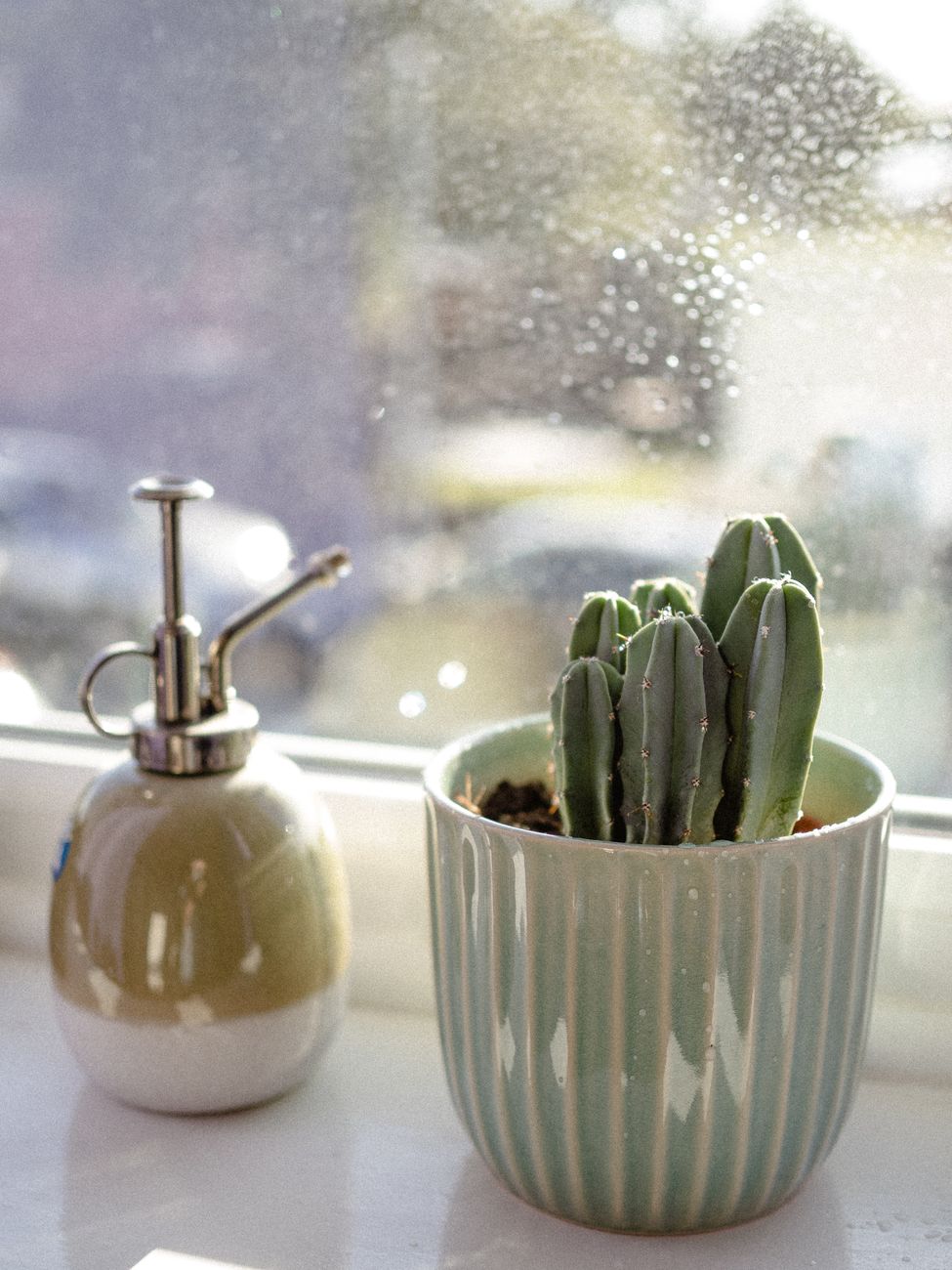
The claim. Thorns are read as thousands of tiny poison arrows, sha qi radiating in every direction. Traditional sources link cacti indoors to tension and arguments in the household. Sharp forms aimed at people are one of the oldest objections in the system, and a cactus is a plant made entirely of them.
Where it flips. Outdoors, the same spines are a feature. A spiky plant on the perimeter is a guardian, protecting the boundary, and that is the same logic as a thorny hedge under a window. Nobody in feng shui thinks a cactus in the front garden is a problem.
The compromise everyone can live with. A cactus on a windowsill with the spines facing out is the placement most practitioners accept. It is inside your home but pointed at the street.
Be honest about the disagreement. Not all schools condemn cacti indoors, and the rule they converge on is placement, not banishment. So the useful advice is narrow: keep them off the coffee table you lean over, off the desk edge you squeeze past, and out of the bed’s line, which is covered in more detail in plants in the bedroom.
The plain reason. People reliably prefer curved forms to sharp ones. It is one of the better replicated findings in empirical aesthetics, and sharp shapes get flagged slightly harder by the brain’s threat detection. Worth the honest wrinkle though: in the research, curves win on beauty judgments but do not actually stop people entering angular rooms. So “sharp shapes read as less calm” is defensible. “A cactus is causing your arguments” is symbolism.
Dried flowers
The claim. Traditionalists treat dried flowers as corpses, elegantly arranged, and give them the same verdict as dead plants. Wood element with the life taken out of it.
The pushback. Plenty of modern practitioners allow them, especially when the bunch means something to you (a wedding bouquet, flowers from someone). Intention is doing the work in that reading.
Verdict: genuinely contested, so treat it as taste rather than doctrine. The one point both sides would accept: a dried arrangement that has gone gray and furry with dust has stopped being a decorative object and become the dead plant problem for real. If you keep them, keep them clean and replace them when they turn.
Fake plants
This is a real three way split, and it is worth knowing which camp any advice you read is coming from.
- Classical view: no. A fake plant is fake qi. There is no living wood element in a polyester leaf, it collects dust, and the whole object is a symbol of pretending.
- Pragmatic and BTB view: fine. A high quality realistic silk plant carries the symbol of wood energy, and that beats a dying real plant or an empty dark corner. Intention counts in this school, so a fake plant chosen deliberately is not the same as a fake plant bought as filler.
- The consensus compromise. Real plants where things can actually live, good fakes only where nothing survives, and never cheap dusty plastic. Almost everyone on both sides signs off on that sentence.
The plain reason to follow the compromise. The research people cite for houseplants is about contact with living things, and nobody has tested whether a silk ficus does anything for your mood. Do not let anyone tell you the science says either way, because it has not been asked. What is not in doubt is the dust: a fake plant that never gets wiped becomes exactly the neglect signal that dead plants are, just slower.
Where fakes earn their place. Windowless bathrooms, the top of kitchen cupboards, a dark hallway with no window at all, a rental where you cannot drill in a shelf near the light. Buy one good one instead of three bad ones, and wipe it when you clean.
Bonsai
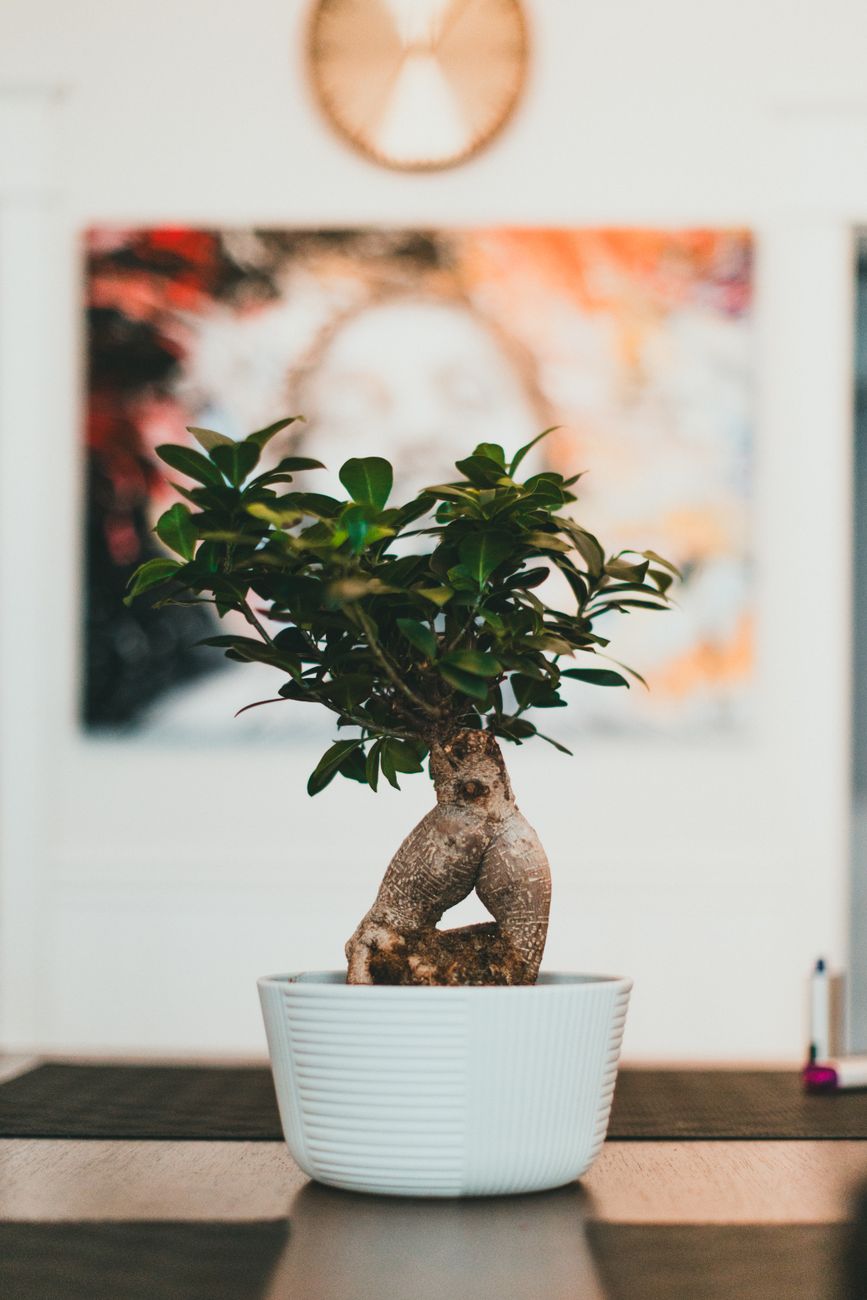
The claim. A bonsai is a tree that has been deliberately kept small. Feng shui reads that as contained growth, which is a bad symbol to put anywhere you want expansion, so the objection is loudest for wealth and career areas and for businesses.
The counter camp. Bonsai represents patience, mastery, and a long relationship with a living thing, which is how the art itself understands it. Practitioners split roughly along classical lines (avoid, especially for business) versus aesthetic modern lines (fine, with intention).
The near consensus. Even people who love bonsai tend to say keep it out of the wealth corner. That is the part of the rule with the widest agreement.
Honest verdict. This is symbol against symbol, with no mechanism on either side, and it is worth remembering that schools cannot even agree where the wealth corner is. The only practical note that survives: a bonsai is a demanding plant, needs regular watering and real light, and a struggling one is extremely visible. If you are not going to look after it, you are walking straight into the one rule that everybody agrees on.
Weeping and drooping plants in a career area
The claim. Weeping figs and some ferns hang downward, and downward is read as declining energy, so they are discouraged in career areas.
Flag this one as thin, even by feng shui standards. It is a minor rule with low consensus, and you will not find it in every source. The reason it makes lists at all is that it sounds tidy.
The plain reading. If a plant droops because it is thirsty or root bound, that is a care problem and it will fix itself with a watering can. If it droops because that is the shape of the species, it is just a shape. Weeping figs do drop leaves the moment you move them, which is a genuine reason to skip one if you are not a confident plant owner, and it has nothing to do with your career.
The plants people wrongly fear
The snake plant. The most common false positive. It is debated, not banned. One camp reads the upright sword shaped leaves as protective, cutting through negative energy, and likes it near entrances. The other camp reads sharp as sharp and keeps it out of bedrooms and soft rooms. Both camps agree it is fine in offices, entries and low traffic corners. So this is a placement argument between practitioners, not a plant you need to get rid of.
Almost everything else on those lists. If a list tells you a peace lily, a pothos or a spider plant is bad luck, that is search engine filler, not feng shui. Pothos in particular is one of the classic cures: it is the plant traditionally used to soften a sharp cabinet corner and to fill dead zones like the tops of kitchen cupboards. Being told to throw out the recommended cure is a good sign you are reading a made up list.
A quick test for any bad plant claim you meet: ask which school says it, and ask what you are supposed to do instead. Real rules come with a placement fix. Invented ones come with a shopping list.
The rule that actually matters
Strip all of it down and you get two lines.
A thriving plant is good. A struggling one is not. That is the entire agreed core of feng shui plant advice, and it is the only part with a mechanism you can say out loud without using the word qi.
Placement beats species. Every real objection on this page turned out to be about where the plant sits: the cactus on the perimeter instead of the coffee table, the bonsai out of the wealth corner, the snake plant in the hallway instead of by the pillow, the fake plant in the windowless bathroom where nothing else lives.
So buy the plant you can keep alive, put it somewhere it gets the light it needs and is not jabbing at anyone, and stop worrying about the list. The plant you water is the lucky one.
Further reading
- Feng shui · Chinese traditional practice
- Qi · Vital force in traditional Chinese philosophy
- Cactus · Family of mostly succulent plants, adapted to dry environments
- Bonsai · Japanese art of miniature trees
- Artificial plants · Imitations of natural plants
- Houseplant · Ornamental plant in a home or office
- Dracaena trifasciata · Species of flowering plant
Definitions and background from Wikipedia.
Quick questions
- Is a cactus bad feng shui?
- Indoors, pointed at where you sit or sleep, most practitioners say yes: the thorns are read as many tiny poison arrows, and the claim is that they build tension and arguments. Outdoors it flips completely, because a spiky plant on the perimeter is a guardian, the same logic as a thorny hedge. Not every school condemns them, and the rule they all end up agreeing on is placement, not banishment. A cactus on a windowsill with the spines aimed out the window is the standard compromise.
- Are fake plants bad feng shui?
- It depends who you ask, and this is a genuine three way split. Classical practitioners call a fake plant fake qi, plus a dust collector. Pragmatic and BTB practitioners say a good silk plant carries the symbol of wood energy and beats both a dying real plant and an empty dark corner. The compromise most people land on: real plants where things can actually live, good fakes only where nothing survives, and never cheap dusty plastic.
- Why is bonsai considered bad feng shui?
- Because it is a tree that has been deliberately kept small, and feng shui reads that as contained growth. That is why the objection is loudest for wealth and career areas. The counter camp reads the same tree as patience and mastery, which is how the art itself sees it. The near consensus, even among people who like bonsai, is to keep it out of the wealth corner and enjoy it somewhere else.