Every feng shui rule, rated by a skeptic
The short answer: Roughly a third of the famous rules hold up. Facing the door from your bed and desk, opening the windows, getting daylight in, clearing clutter and binning dead plants are green: there is evidence or an obvious practical reason. Mirrors facing the bed, beams over the bed, soft corners and paired nightstands are amber: right advice, wrong reason, or thin evidence. The wealth corner, crystals, bagua colors and lucky objects are red: symbolism only. Red does not mean useless, it means do not expect results.
Most feng shui content has one setting: everything works. Most skeptic content has the other one: none of it does. Both are lazy, because the rules are not one thing. Some of them are ideas architects use daily under different names. Some are jewelry sales.
So here is every famous rule with a score attached, and the reason for the score.
How the scoring works. I am rating the advice, not the vocabulary. If a rule tells you to do a sensible thing for a silly reason, it still gets credit, and I say which half is doing the work.
- 🟢 GREEN. There is real evidence, or an obvious practical reason. Do it.
- 🟡 AMBER. Plausible, but the evidence is thin or mixed, or it works for a mundane reason rather than the stated one.
- 🔴 RED. Symbolism only. No mechanism, no evidence. Harmless if you enjoy it, but do not expect results.
Every rule, rated
| Rule | Rating | The honest verdict |
|---|---|---|
| Bed in the commanding position: see the door, not in line with it, solid wall behind | 🟢 GREEN | The best crossover in the system. Jay Appleton’s prospect and refuge theory says the same thing in lab language, about 3,000 years later. |
| Desk facing the room, back to a wall | 🟢 GREEN | Almost nobody works comfortably with a door behind them. Free to fix and you feel it the same day. |
| The cook should be able to see the kitchen door | 🟢 GREEN | Same rule, worse consequences. Being startled at a hot pan beats being startled at a laptop. |
| Open the windows, do not let air sit | 🟢 GREEN | The strongest evidence attached to any of this. Stale air measurably drags your thinking down. |
| Light in, dark stagnant corners out | 🟢 GREEN | Qi is a decent metaphor for daylight. Your body clock runs on the stuff. |
| Clear the clutter | 🟢 GREEN | The cortisol headline is oversold. The attention cost is real, and a clear floor is just easier to live on. |
| Throw out dying plants | 🟢 GREEN | A dead plant is a visible signal of neglect, and neglect signals change how a room reads. |
| Keep living plants around | 🟢 GREEN | Nature contact is one of the better backed wins in design psychology. A pot is a small dose, but it is a dose. |
| No mirror facing the bed | 🟡 AMBER | Nothing to do with souls. Movement in a dark mirror startles a half asleep brain, which is reason enough. |
| Plants clean your air | 🟡 AMBER | True in a sealed chamber, irrelevant at houseplant scale. Open a window instead. |
| No sleeping with your feet pointing out the door | 🟡 AMBER | The coffin story is folklore. The layout it bans is also the one with hallway light, noise and zero privacy. |
| No beam over the bed, high ceilings for gathering rooms | 🟡 AMBER | One clever ceiling study, never solidly replicated. A looming mass overhead is plausibly threat flagged, and unproven. |
| Soften sharp corners pointing at you (poison arrows) | 🟡 AMBER | Human brains really do rate curves as more beautiful. They do not actually avoid angular rooms. Nothing is cutting you. |
| Two matching nightstands | 🟡 AMBER | Symmetry reads calmer, that part is solid. It will not find you a partner. |
| The wealth corner, southeast or back left | 🔴 RED | Two schools, two different corners, no mechanism in either. |
| Paint colors chosen by bagua sector | 🔴 RED | Color psychology is the flimsiest branch in the field. Brightness and light temperature are the real levers, not hue. |
| Crystals as cures | 🔴 RED | Mostly modern retail. Classical rule of thumb: if a cure requires you to buy something, it is probably not classical. |
| Money frogs, lucky bamboo, wealth ships, coin strings | 🔴 RED | Folk talismans grafted on during the boom years. Fine as decor, and that is all. |
| Bagua mirror over your front door | 🔴 RED | An outdoor folk defense object that most masters now discourage, because it points your problem at a neighbor. |
| Mirror opposite the front door | 🔴 RED | Classical says it bounces qi back out, western BTB says it invites qi in. When schools flatly contradict, you are looking at taste. |
| Wind chimes as an all purpose cure | 🔴 RED | Practitioners argue about it inside the tradition. Outside the tradition there is nothing to argue about. |
| Annual afflictions and activating sectors | 🔴 RED | The most technical, most genuinely classical layer of the lot, and still no evidence outside its own system. |
Eight green, six amber, eight red. Which is roughly the honest shape of the thing.
The green ones people do not expect
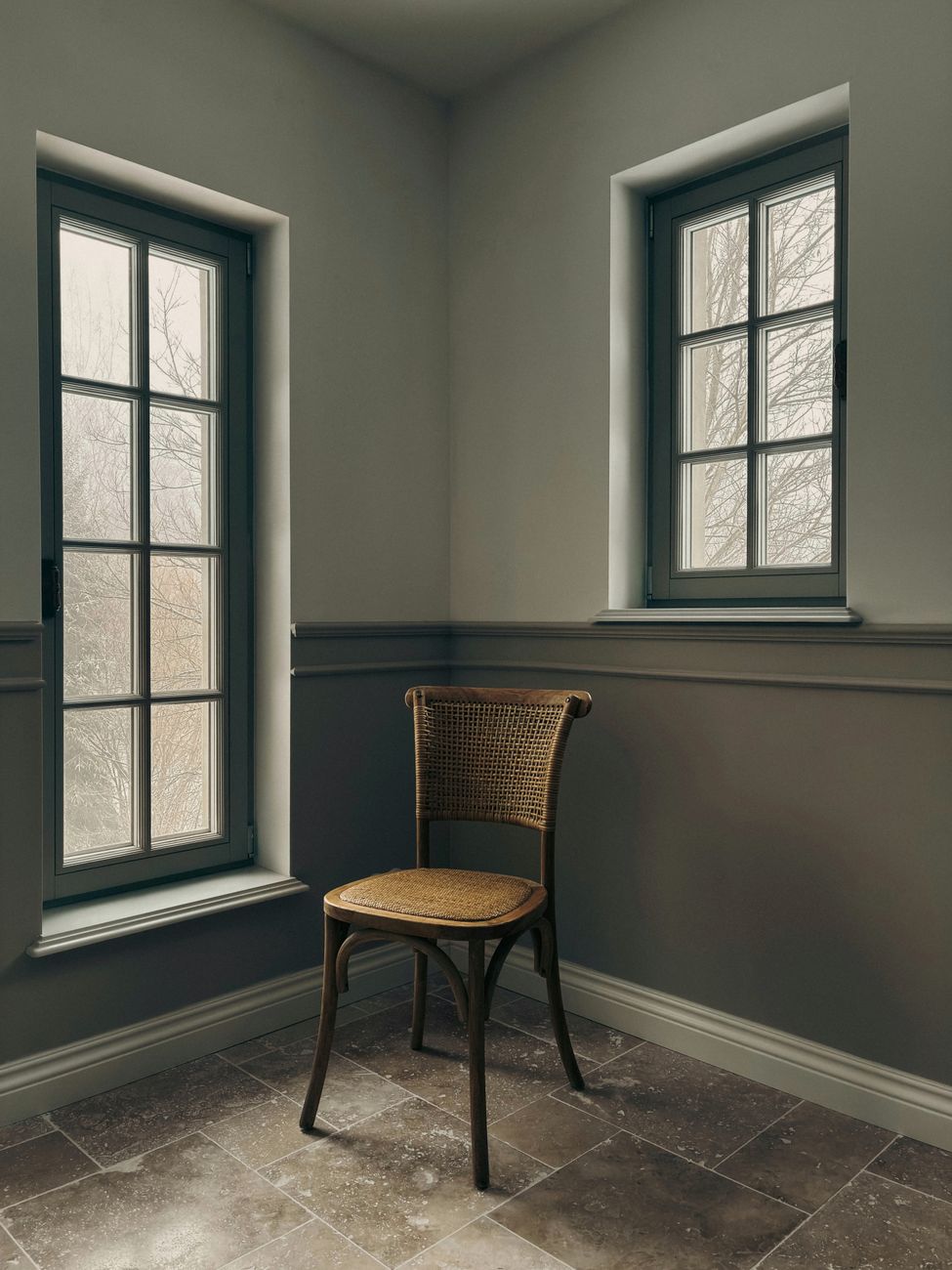
Facing the door. This is the one that converts skeptics. Feng shui says put the bed, the desk and the stove where you can see the entrance without sitting in line with it, back protected. Jay Appleton called the same setup prospect and refuge in 1975: humans prefer a clear view out with a covered back, which is a sensible thing for an animal on a savanna to want. Seating studies keep confirming it, in restaurants, offices and classrooms. People pick the wall backed, door facing seat. Be careful with the strength of the claim though: what is measurable is the preference and the discomfort, not harm. Nobody has shown that a badly placed bed makes you ill. Details for the bedroom are in where to put your bed, and for the desk in the desk commanding position.
Air. This is quietly the strongest evidence in the whole subject. Harvard’s COGfx work found cognitive test scores roughly doubling in high ventilation conditions compared to conventional office air, and CO2 and VOC levels directly hurt decision making. Honest caveats: that research was partly funded by green building interests and the lab conditions were extreme. But the CO2 and thinking link has been found independently elsewhere. “Open your windows, your ancestors were right” is a defensible sentence.
Light. Feng shui says qi comes in with light and dark corners collect the bad kind. Swap in circadian rhythm and you get almost the same instructions. Morning bright light is the first line treatment for seasonal depression. One office study found people sitting near windows slept about 46 minutes more per night, small sample, but it sits inside a much larger literature that all points the same way.
Clutter. The pop version (“clutter raises your cortisol”) is stronger than the data. The study everyone quotes is Saxbe and Repetti, 2010: it was correlational, the effect showed up in women only, and it measured how people described their homes rather than how messy the homes objectively were. Stressed people may simply let things pile up. What is much better supported is that visual clutter competes for your attention whether you look at it or not. So this is green for the boring reason, not the hormonal one. If you want the clearest demo of the whole green list in a single room, it is why hotel rooms feel calm.
Dead plants. Feng shui says a dying plant drains the room. Stripped of the metaphor: a dead plant is a visible piece of evidence that nobody in this house is looking after anything, and environments that broadcast neglect measurably change how people feel and behave in them. Water it or bin it.
The red ones are the ones being sold to you
Notice the pattern in the red column. Nearly every rule that scored red has a product attached.
The wealth corner is the flagship. The fixed far left corner comes from the western BTB bagua, the fixed southeast version comes from mashing BTB life areas onto the compass bagua. In classical Flying Stars there is no universal wealth corner at all: it depends on your house’s facing degree and construction period, so two identical floor plans facing different ways have different wealth spots. If it were a physical feature, two schools could not both be right about where it is. The longer version, including why you should build one anyway, is in the wealth corner.
Crystals, money frogs, lucky bamboo, wealth ships, coin strings. None of these appear in classical texts as method. They are Chinese folk religion talismans plus, in the case of citrine for money, largely a modern retail invention. Serious practitioners have a rule of thumb worth stealing: if the cure requires you to buy something, it is probably not classical feng shui. The economics explain themselves. A system whose cures are layout and orientation sells consultations. A system whose cures are objects sells inventory forever.
Colors by bagua area. Both feng shui element colors and pop color psychology are symbolic systems wearing a lab coat. The most famous color study (red helps detail work, blue helps creative work) failed to replicate with three times the sample. What does hold up is duller and more useful: brightness, saturation and light temperature affect you, hue mostly does not. Which means feng shui’s practical prescriptions accidentally land in defensible territory anyway, because a calm, warm, low arousal bedroom is exactly what sleep research asks for. Right room, wrong explanation.
And it is not only the pop end. Annual afflictions, activating sectors and the whole Flying Star timing layer score red too, and that is the most technically demanding, most genuinely classical part of the tradition. Being old is not evidence. Being complicated is not evidence either.
Right rule, wrong reason
The amber pile is the most interesting one, because these rules keep giving good advice while explaining themselves badly.
The mirror facing your bed. The traditional readings range from disturbed rest to a third party entering your marriage. The defensible mechanism is much smaller and much more boring: a mirror catches movement and light in a dark room, and a half asleep brain treats sudden movement as something to wake up for. Same instruction, no metaphysics, and a sheet thrown over the mirror tests it in one night. Full breakdown in the mirror facing your bed.
Plants purifying your air. The claim traces back to a 1989 NASA study of plants in sealed chambers, built for space stations, then marketed for thirty years. In a real room with real ventilation you would need an absurd number of plants per square meter to match what your windows already do. Keep the plants for the mood effect, which is real, and cover the air with a window. Species that survive a bedroom are covered in plants in the bedroom.
The coffin position. Feet pointing straight out the door is the one layout every school avoids, and the traditional reason is exactly as grim as the name. But look at what that rule bans. A bed in the direct line of the door gets hallway light, hallway noise and no sense of enclosure, which is the same complaint prospect and refuge makes. The folklore and the psychology forbid the same square meter for completely different reasons.
Why red does not mean pointless
Symbolism is not the same as worthless, and this is where most skeptics stop thinking too early. Four honest reasons to do a rule that scored red:
- It makes you look. Most people never audit their home in their lives. Any structured framework beats no framework, including a wrong one.
- It is a goal cue. Setting up a wealth corner is a physical vision board. Environmental cues for goals do modestly nudge behavior.
- Ritual lowers anxiety. There is a real body of research showing that rituals, even arbitrary invented ones, reduce anxiety and raise your sense of control. A feng shui’d room is a control ritual for your entire life.
- Perceived control is not nothing. If you believe your home is working for you, that belief has downstream effects on mood. That is a real result. It is just not a result about money.
About a third of feng shui is evolutionary psychology in a silk robe, a third is decent design instinct, and a third is pure ritual, and the ritual third still works on your brain, just not on your bank account.
If you only fix five things
- Move the bed so you can see the door from your pillow without lying in line with it, wall behind the headboard.
- Do the same with your desk, or at minimum stop sitting with your back to the room.
- Open the windows properly, every day, especially the bedroom before you sleep in it.
- Get more daylight into whichever room you start your morning in, and add lamps in whatever the darkest corner is.
- Clear the floor and the surfaces, and deal with the plant that has been dead since March.
Every one of those is green, free, and needs nobody’s permission. The crystals can wait.
Further reading
- Feng shui · Chinese traditional practice
- Bagua · Eight trigrams used in Taoist cosmology
- Qi · Vital force in traditional Chinese philosophy
- Jay Appleton · British geographer
- Biophilia hypothesis · Idea that humans innately seek connections with the natural world
- Circadian rhythm · Natural internal process that regulates the sleep-wake cycle
- Ritual · Activities performed according to a set sequence
- Superstition · Belief or behavior that is considered irrational or supernatural
Definitions and background from Wikipedia.
Quick questions
- Which feng shui rules actually work?
- The ones with a mechanism you can name without using the word qi. Sit and sleep where you can see the door with a wall behind you, open the windows, get daylight into the rooms you use in the morning, keep the floor and surfaces clear, and throw out dead plants. Those five are backed either by real research or by plain common sense, and they cost nothing.
- Is feng shui scientifically proven?
- No, and nobody has tried to test it as a whole system. What exists is research on individual things feng shui also happens to recommend: seating preference, daylight and circadian rhythm, ventilation and thinking, nature contact, curved versus angular shapes. Some of that research is strong, some is one small study that got quoted to death. The compass, element and timing layers on top have never been tested at all.
- Should I bother with the rules that scored red?
- If you enjoy them, yes, and be honest with yourself about why. A wealth corner is a physical goal reminder. A ritual you repeat measurably lowers anxiety and raises your sense of control, even when the ritual is arbitrary. That is a real effect on you. It is not an effect on your income.