Toilet feng shui: should you really close the lid?
The short answer: Close the lid, close the door. In feng shui water stands for wealth and the toilet is the biggest open drain in the house, so an open bowl reads as money leaving. Nothing shows that flushing costs you money, but the habit is worth keeping anyway: closing the lid cuts the spray, holds the smell, and an open bowl is just an ugly thing to look at.
Everybody knows the rule. Lid down, door closed. It is the most repeated habit in all of feng shui, and it gets repeated so often that nobody bothers to explain it anymore. So here is where it comes from, what it can and cannot do for you, and which version applies to your actual home. A separate WC off a hallway and a toilet you can see from the sofa are not the same problem, and most articles pretend they are.
One note on scope: this is about the bowl. The shower, the damp, the mirrors and the ensuite next to your bed are a bigger job and get their own article.
Where the lid rule comes from
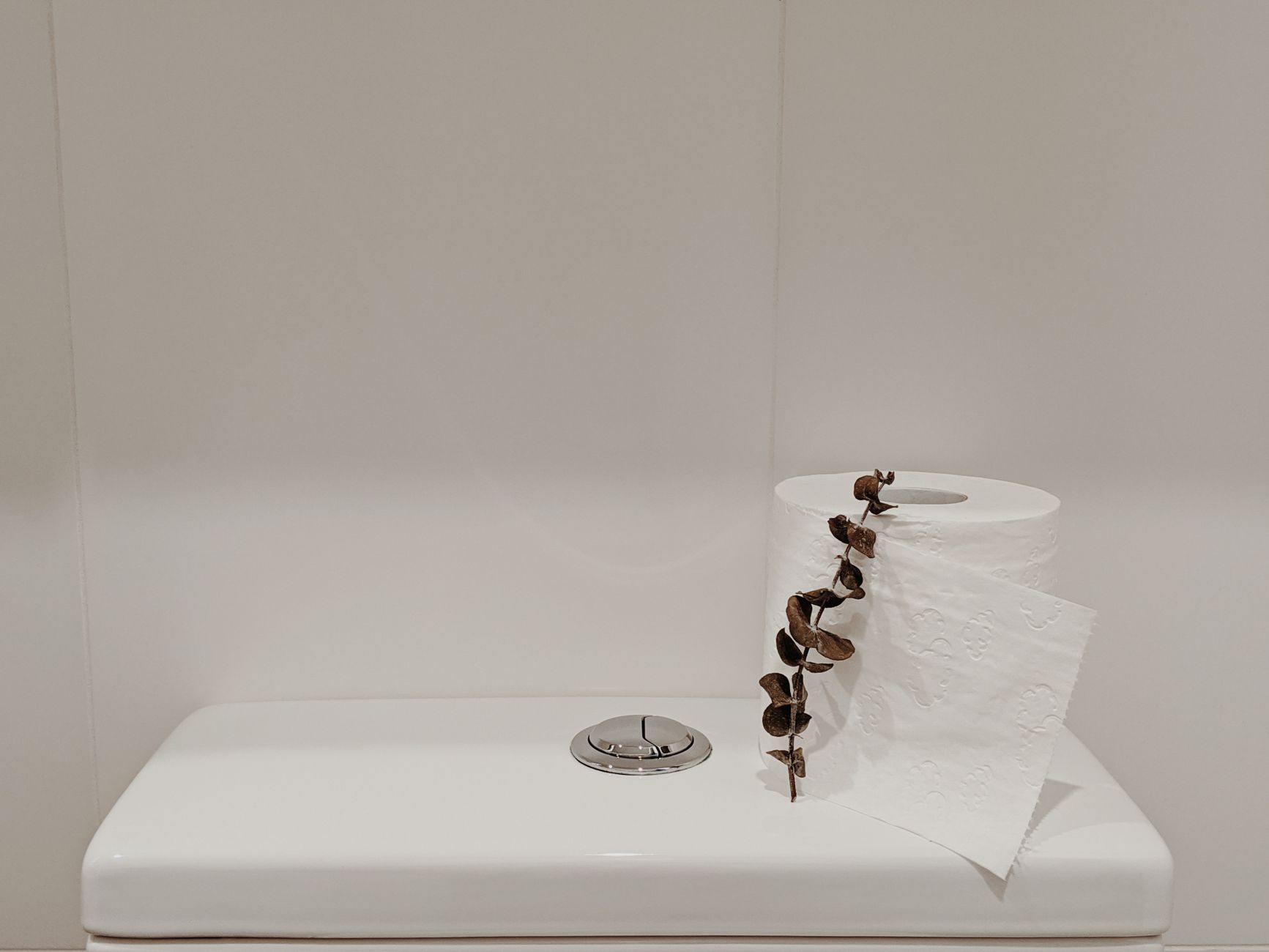
In feng shui, water stands for wealth. The bathroom is the only room in the house whose whole job is draining. Every fixture in it takes water away, so the room reads as a place where wealth leaves, and the toilet is the biggest open drain in it. That gives you two moves, which are really the same move at two sizes: lid down closes the drain, door closed stops the drain room pulling qi out of the rest of the house. That is the entire doctrine. Everything else you will read is a variation on those two lines.
Worth naming the tier, because most sites will not. This is not a deep classical formula. A classical practitioner works from the land outside, the facing direction of the house in degrees, and where the good and bad stars land in your specific floor plan. In that system a bathroom in a bad sector is a feature, not a fault: a room you barely spend time in is a fine place to park a bad star. The lid-down habit is the popular, anyone-can-do-it end of the tradition. Real practitioners give the advice. It just is not the secret engine of the system.
Does flushing really flush your money away?
No. Let’s be blunt. There is no mechanism and no evidence. Water equals wealth is a metaphor, and a decent one, but a metaphor does not touch your bank balance. If toilets drained money, plumbers would be the richest people in the country.
What is true is that the habit is good for three plain reasons that have nothing to do with qi.
The flush throws a spray. Flushing with the lid up lifts a fine mist of droplets out of the bowl and into the room. Researchers have lit the plume with lasers and photographed it, and it goes higher and further than most people would guess. Closing the lid cuts it down a lot. Honest caveat: a lid is not an airtight seal, so it reduces the spray rather than stopping it, and for a healthy household nobody has shown this makes you measurably less sick. It is free, and it is obviously the better option when your towels and toothbrush share the room.
Smell. A closed lid and a closed door hold it in one small space instead of letting it wander down a hallway. Not deep, but it is the reason the habit sticks.
The look of it. An open bowl is the least appealing object in your home. A closed lid turns it into a flat white surface you stop noticing, and in a small WC that does more for the room than anything you could buy. Feng shui arrived at a good habit through symbolism. That happens a lot in this system, and it is why the rule survived.
Find your layout first, because the fix changes
1. The separate WC off a hallway. The European standard: a bowl, maybe a tiny basin, one door, often no window at all. The closed door is already doing the heavy lifting here and you probably close it out of habit. The lid matters more than usual because the room is tiny and the air has nowhere to go. The real problem in this layout is air and light, not wealth, and that gets its own section below. One extra: because the door stays shut, this room drops out of your attention and quietly turns grubby. Put it on the same cleaning rhythm as the kitchen.
2. The toilet inside a combined bathroom. You close this door for privacy without being told, so the door rule is handled. The lid is what matters, because your toothbrush, your towels and your face are all in the same small room as the spray. The other thing to check is what you see when the door swings open. If the bowl is the first thing in view from the landing, fix it by keeping the door shut, not by moving plumbing.
3. The toilet visible from an open-plan living space. Common in newer builds and converted lofts: a small downstairs toilet opening onto the living or dining area. Feng shui has no dedicated classical rule for this, and anyone who says otherwise is guessing. It is drain-room logic stretched to a modern floor plan, so treat it as sensible extension, not ancient doctrine. Open plans are a feng shui headache anyway, because qi has no containers and either races through or puddles in odd pockets. The plain reason is enough on its own: nobody wants to see that door, or hear it, from the dinner table. Fixes are all renter’s toolkit. Keep the door shut, hang a curtain on a tension rod if the door sits in an awkward recess, put a tall plant or a console just off to one side to break the sightline, and fit a soft-close seat so the room announces itself less.
The toilet you can see from the front door
This one is a genuine named rule. The front door is the mouth of qi (气口). Everything that arrives, opportunity, money, luck, comes in there, and practitioners audit it before anything else in the house. A bathroom door directly facing it means whatever comes in is flushed on arrival. It sits on the standard list of things that should not face the front door, next to a staircase, a mirror, and the back door.
The plain reading is just as strong. Whatever you see first when you open your own front door sets your state, and it does the same for anyone you let in. A toilet bowl is a poor greeting.
Fixes, none of which need a landlord’s permission, in order:
- Door closed, lid down. Free, and it handles most of it.
- Give the entry something better to look at. Art on a side wall, a lamp, a healthy plant. Qi follows the eye, and so do actual eyes.
- Break the sightline. A console, a folding screen, or a tall plant set off to one side so it catches your eye without blocking the walking path.
- Put a plant inside the WC. The practitioner logic: wood drinks water, turning a drain into growth. On the cistern is the classic spot. The plain version: a green thing is nicer to glance at than porcelain.
- Hang a faceted crystal if you like it. It is meant to disperse the descending qi. That part is symbolism. It costs almost nothing and does no harm, so buy it because you like how it catches the light.
One contested option: a small mirror on the outside of the bathroom door, used by some practitioners to deflect qi away from the drain room, disliked by others on principle. Genuinely split, so treat it as optional. What you should not do is hang a mirror directly opposite the front door. Compass-school practitioners are near-unanimous that it bounces incoming qi straight back out, though BTB teachers often think a mirror near the entry is fine or even good. When schools disagree that hard, take the side wall.
A toilet facing a bedroom door
Same drain-room logic, one door further in. The classical rules are more specific about a headboard sharing a wall with a toilet, which belongs to the bathroom article. Door-to-door with a bedroom is the popular extension of the idea, so file it that way.
The practical case is stronger anyway: sound, smell, and a bright light going on at three in the morning, all aimed at the room where you are trying to stay asleep. Fixes: keep both doors shut at night, fit a soft-close seat, swap the bulb for something warm and dim or add a low night light, and run the fan so the door does not have to be left open to clear the air.
The toilet in the wealth area
The most asked feng shui question on the internet. Overlay the bagua and the far-left area from your front door is wealth in the western three-door version, or southeast in the compass version. If your WC lands there, the panic content finds you.
The honest map. Western and BTB practitioners take it seriously and will stack cures on it. Classical practitioners think it is overblown, and Master Sean Chan is one of the loudest on that. In classical Flying Stars there is no universal wealth corner at all: wealth sits where the timely water star lands in your particular house’s chart, which depends on the facing degree and the period it was built in, and it shifts every year. Two identical floor plans facing different directions have different wealth areas. So the fixed corner you are worried about may not be your wealth area under the older system at all.
If you want to do something regardless, the cures stack rather than compete:
- Lid down, door closed. The baseline, always.
- A thriving plant, cistern being the classic spot. Wood drains water productively.
- Earth elements: ceramic accessories, an earth-tone mat, square shapes. Earth dams water.
- No wealth symbols in there. You would be washing them. Activate wealth somewhere else, since the bagua repeats at room scale.
- Make it genuinely nice. Several modern practitioners argue a spa-like bathroom in the wealth area flips the reading from drain to investment in yourself. That is a modern argument, not an old one, but it is the only cure on this list that also improves your life.
More on that whole debate in is the wealth corner real.
The separate WC with no window
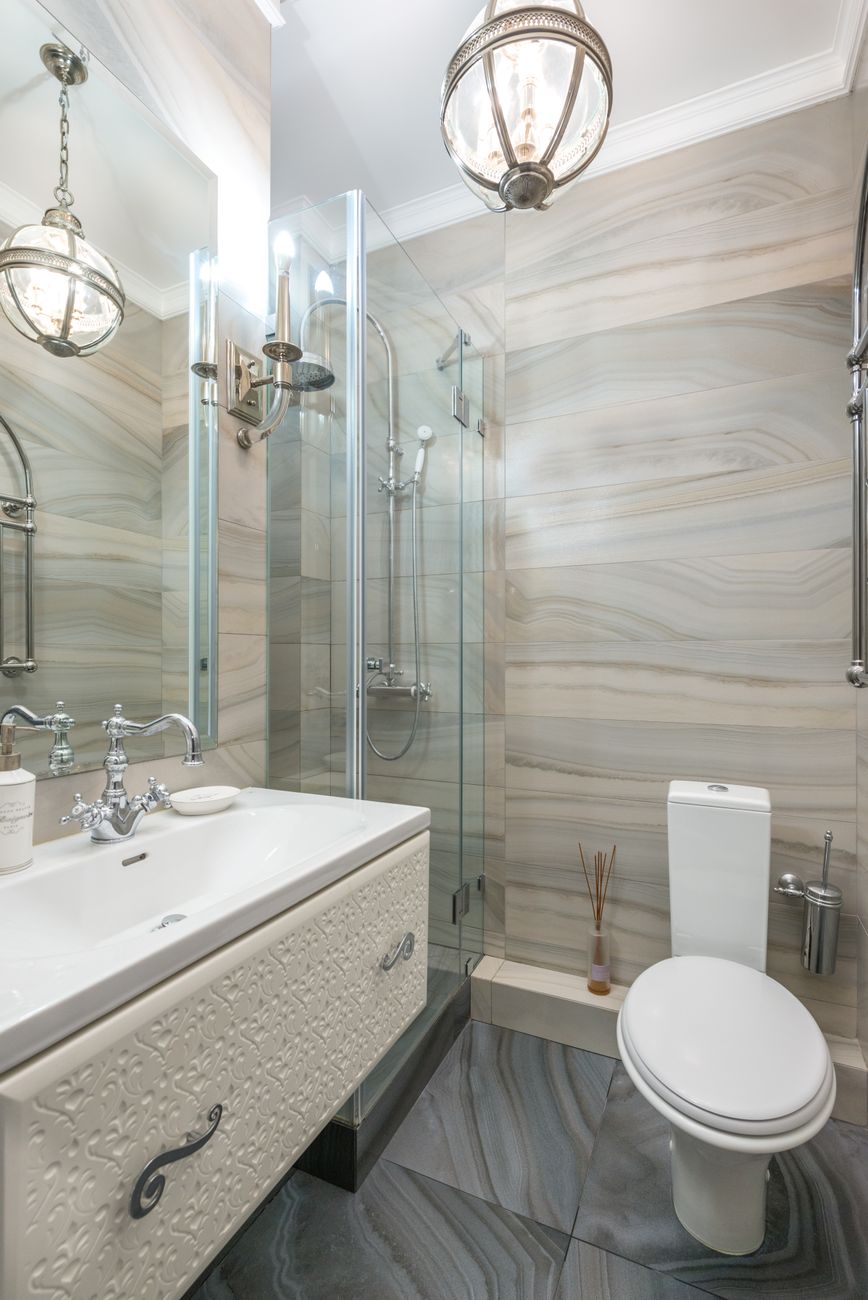
Here is where the real problem lives, and it is not symbolic. Feng shui says dark, unused, unventilated corners collect stagnant qi, and that light and fresh air are how qi gets in. Ventilation happens to be the strongest crossover in the whole system: poor ventilation and rising CO2 measurably hurt how well people think, indoor air is routinely dirtier than the air outside, and a damp little room with no airflow grows mold. That is actual harm, not a metaphor.
- Run the extractor fan, and run it long. Many are wired to the light switch and shut off the second you leave, which is not long enough. A timer version, or a switch you can leave on, is a cheap upgrade.
- Clean the fan. They clog with dust and quietly stop moving air years before they die.
- Light it properly. A single dim bulb in a windowless room keeps it feeling like a cupboard. Warm, bright, ideally more than one source.
- Keep it spotless. Practitioners across every school agree maintenance beats trinkets, and in a room this small it is fifteen minutes.
- Plant only if it can survive. No window means low light. A pothos or peace lily might cope, most things will not, and every school agrees a dying plant is worse than no plant.
There is a real conflict here the tip sites never mention: the closed-door rule and the need to air the room out pull against each other. Resolve it with the fan first, then the closed door. If the fan is broken or nonexistent, crack the door while you are out and close it when you are living in the house.
Worth doing, versus being sold to you
Worth doing, all free or nearly free, and defensible on both readings: lid down before you flush; door closed; fix the drip, the running cistern and the loose seat (practitioners are consistent that you repair before you buy a single crystal, because broken things broadcast broken all day); clean it and light it; run the fan; one healthy plant if the room can keep one alive.
Being sold to you: money frogs, lucky bamboo, coins in the cistern, citrine. None of these appear in classical texts as method. They are Chinese folk talismans and, in some cases, late twentieth century retail inventions grafted onto feng shui during the publishing boom. The rule of thumb serious practitioners repeat almost word for word: if the cure requires you to buy something, it is probably not classical feng shui. One nuance: a plant in a wood sector is legitimate element work, because the element is doing the job, not the object. The frog is decor.
Skip the bagua mirror too. It is an outdoor folk device meant to repel sha, and most modern masters discourage it entirely because it aims your problem at the neighbors.
The actual answer
Close the lid. Close the door. Neither one is protecting your salary, and both are worth doing anyway. Then put your actual effort into the fan, the light, and the drip, because those are the parts of this that are doing something.
Further reading
- Feng shui · Chinese traditional practice
- Flush toilet · Toilet that uses water to convey human waste down a pipe
- Toilet plume · Dispersal of microscopic particles from flushing toilet
- Bagua · Eight trigrams used in Taoist cosmology
- Aerosol · Suspension of fine solid particles or liquid droplets in a gas
- Bathroom · Room for personal hygiene activities, such as showering
- Ventilation (architecture) · Intentional introduction of outside air into a space
Definitions and background from Wikipedia.
Quick questions
- Does closing the toilet lid actually keep money in the house?
- No. Water standing for wealth is a metaphor, not a mechanism, and there is no evidence behind it. Close the lid anyway. Flushing with the lid up throws a fine spray into the room, the smell travels further, and an open bowl is the least appealing thing in your home to leave on display. Feng shui reached a good habit through symbolism, which happens more often than skeptics expect.
- My toilet is visible from the front door. How bad is it?
- It is on the standard list of things that should not face the front door, along with a staircase, a mirror and the back door, because the front door is the mouth of qi and a drain right there flushes what comes in. The fix is cheap: keep that door shut, keep the lid down, and give the entry something better to look at, like a lamp, a plant or art on a side wall.
- Is a toilet in the wealth corner really a problem?
- The schools genuinely disagree. Western and BTB practitioners take it seriously and stack cures. Classical practitioners like Sean Chan call the panic overblown, and in classical Flying Stars there is no fixed wealth corner at all: it depends on your house's facing degree and when it was built, and it moves each year. If you want to do something, the standard set is lid down, door closed, a healthy plant on the tank, earth-tone ceramics, and keeping the room genuinely nice.