Feng shui bathroom: which rules matter and which ones are just symbolism
The short answer: Feng shui calls the bathroom a drain because water means wealth, so a room full of drains reads as a room where money leaves. The wealth part is symbolism, but the practical layer under it is real: damp, stale air, and a door pointing somewhere it should not. Keep the door shut, get the air moving, keep the room dry and clean, and you have done about 90 percent of what any school would ask.
Feng shui has one clean complaint about the bathroom: it is the only room in the house whose entire job is to take things away.
Everything else you have read follows from that. Some of it is worth doing. Some of it is a symbol you can safely ignore.
Before any rule applies, work out which bathroom you actually have. Two questions:
- Is it a separate closed room, or an ensuite that opens into your bedroom? Half the rules below only exist because of the bedroom next door.
- Does it have a window, or is it internal? A windowless bathroom breaks the most-repeated feng shui rule in the room, and you need a workaround.
Answer those two and you can skip whatever does not apply to you.
Why feng shui treats the bathroom as a drain
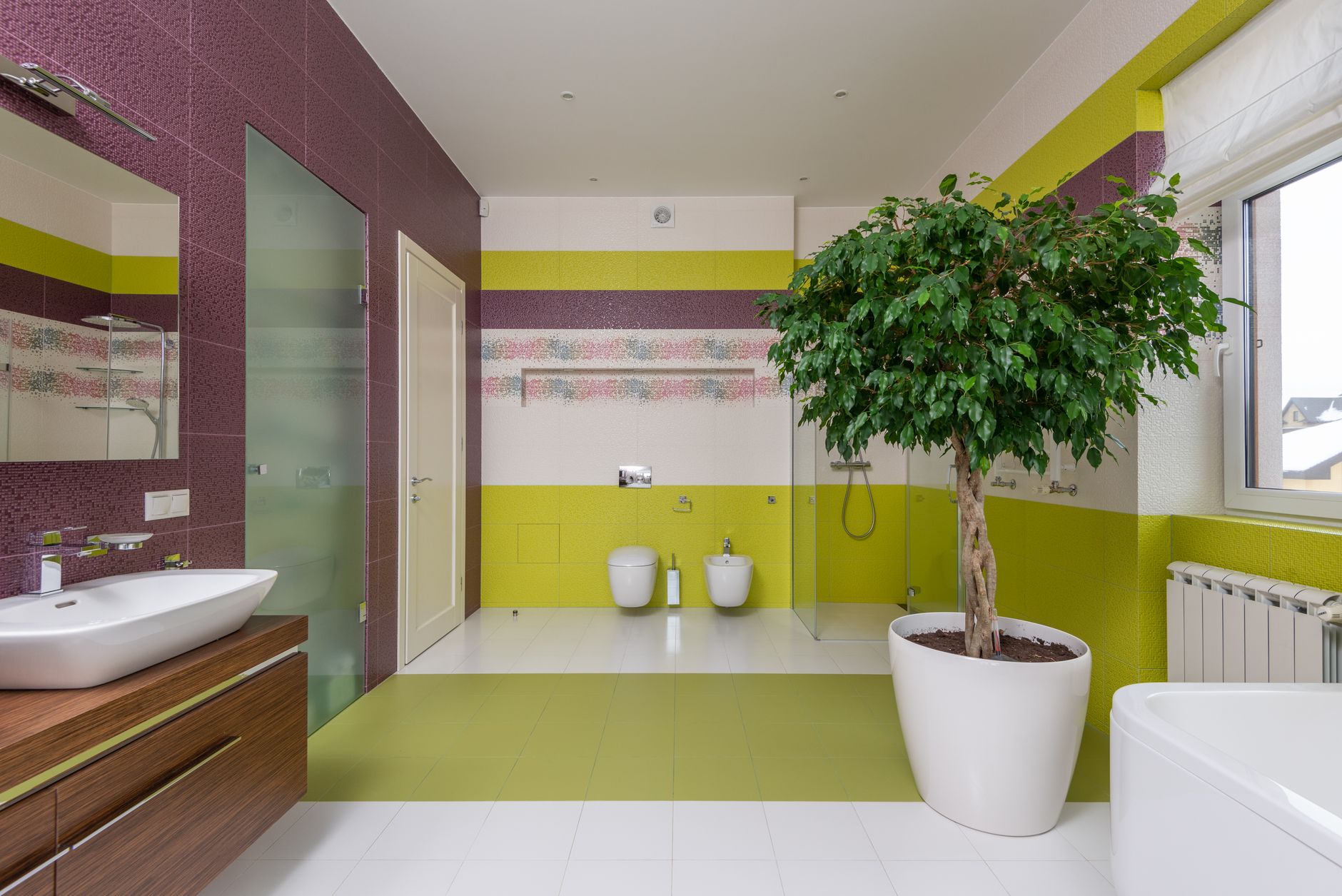
In feng shui, water means wealth. Rivers, fountains, aquariums, all of it reads as money moving. A bathroom is a room of drains, so the reading is that it is a room where wealth leaves the house.
Honest label: that is symbolism. It is not a claim anyone has tested, and the bagua zones it hangs off (wealth in the far left corner, or the southeast in the compass schools) have no evidence behind them at all. Call it tradition and metaphor.
Now the plain version, which is why the rule survived: the bathroom is the one room that quietly wrecks the rest of the house when you neglect it. Water gets out, damp gets in the walls, smells travel, mold appears in the grout, and the repair bill lands somewhere else in the building. The bathroom really is where money leaves. It just does it through the ceiling below, not the bagua.
Both readings point at the same behavior, which is the useful part: pay attention to this room, keep it dry, keep it closed, fix what leaks.
One line on the toilet, because it has its own article: lid down, always. It is the most-quoted feng shui habit there is, and closing the lid also cuts the spray a flush throws into the room. Both camps get to be right on that one.
Where the bathroom door points
Feng shui cares less about the bathroom itself than about what it opens onto. Two problem positions.
Facing the front door. The front door is the mouth of qi (气口), the point where everything enters. If the first thing it meets is a bathroom, the reading is that incoming energy gets flushed on arrival. The plain version: the first thing you and every guest see when the door opens is a toilet, and that sets the tone for the whole place. Fix: keep that door shut as a hard habit, and give the eye something better on the way in. A lamp, a piece of art on a side wall, one healthy plant. Qi follows the eye, and so do people.
Next to or above the kitchen. In element terms this is water fighting the stove’s fire, and the stove is the wealth and health engine of the home. The plain version needs no theory: a drain room sharing a wall with where you handle food. Fix: door closed, and do not leave the bathroom door in a straight line with the stove or the sink if you can help it. If it is fixed, a curtain or screen breaks the line.
The bed case gets its own section below, because that one is different.
Small note that both traditions agree on: keep the door’s swing arc completely clear. Nothing stored in it. And if you ever get to choose, small bathrooms make a real safety case for a door that opens outward, because someone who faints inside falls against an inward door and blocks their own rescue. Hospital codes require outward swing or rescue hardware for exactly that reason.
A bathroom in the wealth area
This is the most-asked feng shui question on the internet, so here is the straight answer.
Overlay the bagua and the far left area from your front door is wealth (or the southeast, if you use the compass school). A bathroom there means your prosperity sector is a room full of drains.
The standard cures, stacked rather than picked from:
- Lid down, door closed. That is the baseline and it is free.
- A thriving plant in the room. The idea is that wood drains water productively: the plant drinks the draining energy and turns it upward into growth. On the toilet tank is the classic spot.
- Earth elements. Ceramic accessories, an earth-tone mat, square shapes. Earth dams water.
- No wealth symbols in this bathroom. You would be washing them. Activate wealth somewhere else, like your bedroom or desk, since the bagua repeats at room scale.
- Keep it beautiful. Several modern practitioners argue a spa-like bathroom flips the reading entirely, from drain to renewal.
The honest verdict: schools genuinely disagree about how bad this even is. Classical masters like Sean Chan call the wealth-corner-toilet panic overblown. Western and BTB practitioners take it seriously and sell cures for it. Since the zones themselves are symbolism, nobody is going to settle this with evidence.
What is left is still worth doing, and notice what it is. Every cure on that list is “clean it, close it, light it, put something living in it.” You could arrive at all five with no bagua at all.
Mirror and storage
One principle covers the mirror: a mirror doubles whatever it faces. Point it at light, at a window, at greenery. Never at the toilet, and never at a pile of clutter, because you have just doubled the thing you did not want.
In practice that means the mirror over the sink is fine, which is where it already is. Check what is behind you when you stand at it. If the reflection is the toilet, either reframe with a smaller mirror or fix what the reflection contains (lid down solves it).
Two more:
- Mirror facing another mirror is out. Endless bounce, and it is genuinely disorienting in a small room.
- A small mirror on the outside of the bathroom door is a cure some practitioners use to deflect qi away from the drain room. Others dislike door mirrors entirely. Mildly contested, low stakes, try it if you like.
Storage is the boring half and it matters more. Feng shui reads clutter as blocked, stagnant qi. The research version is thinner than the internet claims: the well-known cortisol study was correlational, showed the effect in women only, and measured how people described their homes rather than the actual mess. But visual clutter does measurably tax attention, and a bathroom is small enough that six half-empty bottles read as chaos.
Practical: get things off the surfaces and behind a door. A cabinet, a closed box, anything. Bathrooms are the easiest room in the house to declutter, because most of what is on the counter is expired.
Damp, ventilation and mold, which is the real stagnant qi
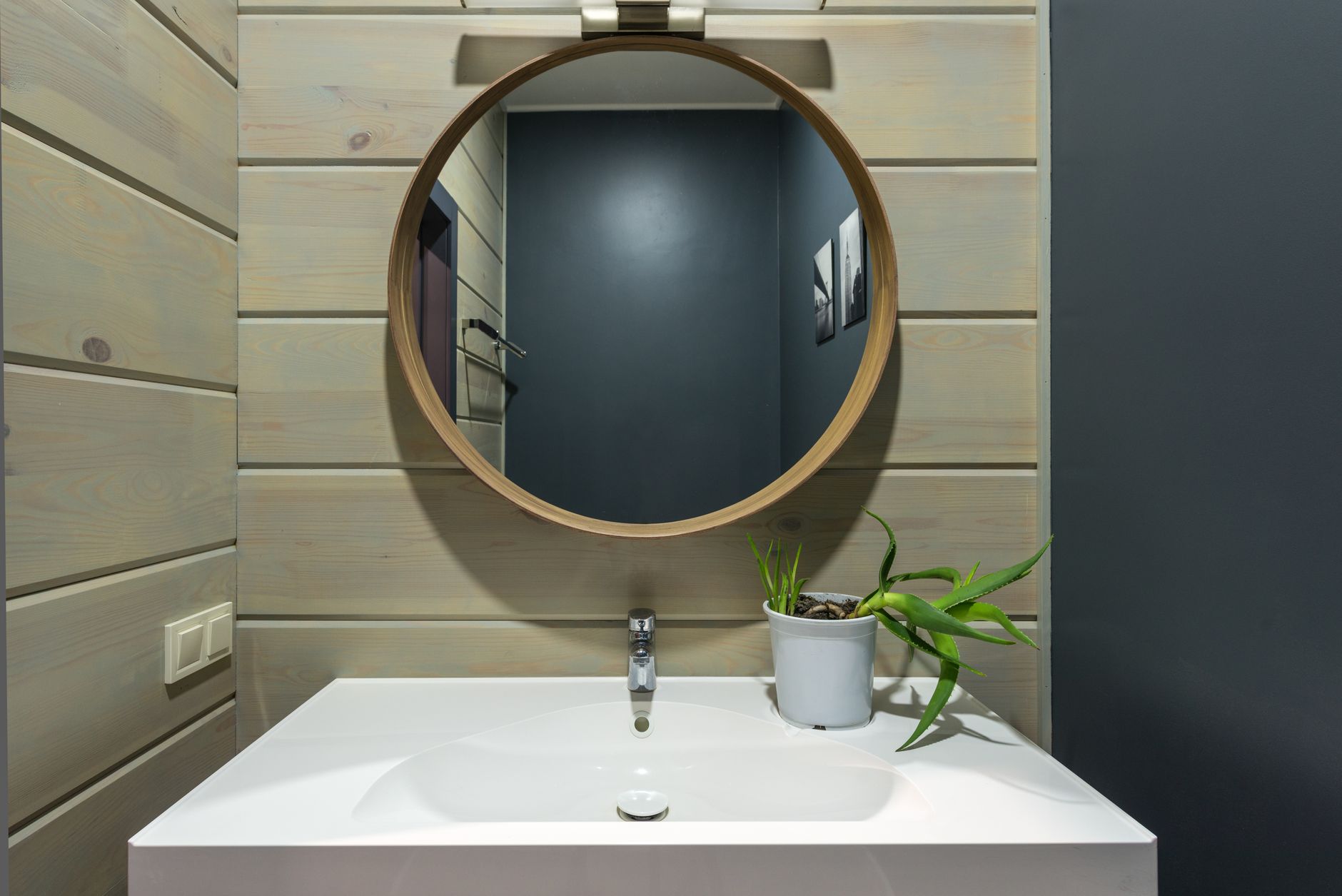
Feng shui says stale air is stale qi and warns about dead-air corners. This is the one place the traditional language maps almost perfectly onto something solid. Ventilation research is the strongest evidence in this whole field: Harvard’s COGfx studies found cognitive test scores roughly doubled under enhanced ventilation compared with conventional conditions, and the CO2 and cognition link has been replicated independently. Worth the caveat that the study was partly funded by green-building interests and the lab conditions were extreme, but the direction is not in doubt.
Bathrooms are where this gets physical rather than abstract. Wet air with nowhere to go condenses on the coldest surface in the room and mold follows.
If your bathroom has a window: open it after every shower. That is the whole cure. It also gives you the option of a real plant and daylight, which nothing else in this article can buy you.
If it is internal and windowless: you have a direct conflict between two rules, and nobody says it out loud. Feng shui says keep the bathroom door closed. A windowless room with the door closed and no working extraction will grow mold. Resolve it like this: run the extractor fan after you get out, not just while you are in there, and leave the door open until the mirror clears. Then close it. If the fan is weak or dead and you rent, a small dehumidifier in the room does the same job and needs no landlord.
Three things that do more than any cure:
- Squeegee or wipe the glass and tiles after showering. Removing the water beats drying it slowly.
- Do not leave wet towels hanging in there. They keep the room at full humidity for hours.
- Use the right paint. Satin is the standard for bathrooms, semi-gloss for trim and the wettest zones. Matte will not survive the moisture and cannot be wiped.
If black spots have already appeared, cleaning them is not the fix. Drying the room out is the fix. Cleaning without fixing the moisture just buys you a few weeks.
Plants that actually survive in there
The plant is the one classical cure worth taking seriously, because it does something. Growing wood energy in a room of draining water, in the symbolic reading. In the plain reading, one living green thing in a small tiled box changes the room more than any object you could buy for the money.
The catch is that a plant only counts if it is thriving. A dying plant is worse than no plant in every school, and in plain terms it is a visible signal of neglect sitting in a room you already ignore.
- Golden pothos is the pick. It is one of the very few plants practitioners actively recommend inside a bathroom, it handles low light, and it forgives being forgotten.
- Peace lily works too, and it tolerates the darkest corners better than most.
- Snake plant survives anything, though the sword leaves split practitioners: one camp calls them protective, the other calls them sha qi generators. In a bathroom, where nobody sleeps, that argument is mostly academic.
- Money tree is the one to skip, despite the name. The tradition puts it in the wealth corner or near the entrance, explicitly not in a bathroom.
Windowless bathroom: be realistic. No daylight means no plant lives there long term unless you give it a bulb or rotate it out to a bright room every couple of weeks. The rotation trick works well if you own two pots and swap them. If you will not do that, take the pragmatic route most modern practitioners accept: one good quality fake, real enough to read as green, kept dusted. Real where things can live, a good fake only where nothing survives, never cheap dusty plastic.
The ensuite problem
If the bathroom opens into your bedroom, you have inherited the rules that make feng shui people twitchy. There are two separate issues and they need different fixes.
Issue one: the bed shares a wall with the bathroom. The rule is to avoid the headboard sharing a wall with a toilet or shower, and to avoid sleeping under an upstairs bathroom. Symbolically, water draining behind your head all night drains your vitality. The literal layer here is real and it is the reason to care: pipes carry vibration and noise, and pipe noise measurably disturbs sleep.
The fix, in order: move the bed to another wall if there is any way to do it. If there is not, get a thick solid headboard between you and the wall, which handles both the symbolism and the noise. Some practitioners also lay a mirror flat against that wall with the shiny side facing the pipes to push the draining energy back. That one is pure symbolism and harms nothing.
Issue two: the ensuite door faces the bed, or there is no door at all. Closed-door ensuites are easy: shut it before you sleep. The habit does the work, and it also keeps the noise and the light of a 3am trip out of the room.
Open-plan ensuites with no door are the harder case, and they are common in newer builds. You get the drain-room reading with nothing between it and your pillow, plus the entirely practical problem that shower steam is now your bedroom’s problem too. Rental-friendly fix: a curtain on a tension rod across the opening, or a folding screen. Both cost little, need no drilling, and give you back the separation the layout removed. Run the extractor properly on top, because in this layout the damp does not stay in the bathroom.
One measurement while you are rearranging: keep at least 60 cm (24 in) clear on the sides and foot of the bed, 75 to 90 cm if you can. Ensuite doorways often eat that path, and a bed you have to squeeze past will annoy you long after you have forgotten which corner is wealth.
What renters can actually do
Roughly 90 percent of feng shui is placement, light, cleanliness and objects, none of which need permission.
- Fabric over anything fixed and ugly. A curtain hides bad built-in shelving or a boxed-in pipe run without a single screw.
- Mirrors and art on removable adhesive strips.
- Earth-tone mat and ceramic accessories instead of repainting. Element energy does not care whether the color is paint or textile.
- A plug-in dehumidifier when the extractor is hopeless.
- A better bulb. A dim bathroom reads as a dead corner in both feng shui and circadian terms, and light is the cheapest cure there is.
The actual answer
Keep the door shut, keep the lid down, get the air out after you shower, keep the surfaces clear, and put one living plant in there if the light allows it.
That list satisfies every school of feng shui and every plumber. If your bathroom sits in the wealth corner, do exactly the same list and stop reading about it. The cures never outrank the basics: light, air, order, and repair first, symbolism after.
Further reading
- Feng shui · Chinese traditional practice
- Bagua · Eight trigrams used in Taoist cosmology
- Bathroom · Room for personal hygiene activities, such as showering
- Ventilation (architecture) · Intentional introduction of outside air into a space
- Indoor air quality · Air quality within and around buildings and structures
- Mold · Wooly, dust-like fungal structure or substance
- Epipremnum aureum · Species of plant
Definitions and background from Wikipedia.
Quick questions
- Is a bathroom in the wealth corner actually bad luck?
- No, and even feng shui practitioners argue about it. Classical masters tend to call the wealth-corner-toilet panic overblown, while Western and BTB practitioners take it seriously. The bagua zones themselves have no evidence behind them, so treat this as symbolism. Do the useful version anyway: keep that bathroom clean, dry and closed, put a thriving plant in it, and set up your wealth corner somewhere else in the home instead.
- Should the bathroom door stay open or closed?
- Closed most of the time, open when you need the air out. Feng shui says a closed door stops the drain-room pulling qi from the rest of the house, and it also stops smells and damp spreading. But a windowless bathroom with the door shut and no working fan will grow mold. The fix is a fan that runs after you shower, or the door propped open for a while, then closed.
- My bed shares a wall with the bathroom and I cannot move it. What now?
- Get a thick, solid headboard between you and the wall. That is the practical fix for the real problem, which is pipe noise and vibration behind your head. Some practitioners also put a mirror flat against that wall with the shiny side facing the pipes to push the draining energy back. That part is symbolism, and it costs nothing if it makes you feel better about the wall.