Mirror facing the front door: the one rule the schools genuinely disagree on
The short answer: Classical compass practitioners say no: the door is the mouth of qi, and a mirror directly opposite it pushes incoming energy back outside before it can circulate. Western BTB practitioners often say a mirror near the entry is fine or even helpful, because mirrors expand and invite. Everyone agrees on the compromise, so use it: hang the mirror on a side wall, perpendicular to the door, where it widens a cramped entry and reflects light instead of throwing your own reflection at you.
Type “mirror facing front door” into Google and you get a hundred articles that all say the same confident thing: don’t do it, your luck bounces out. That confidence is fake. This is the one mirror question where feng shui schools openly contradict each other, and pretending otherwise is the fastest way to spot a content mill. Here is the actual map.
What the rule says
In feng shui, the front door is the mouth of qi (气口). Everything that comes into the house, energy and, symbolically, money and opportunity, comes in through it. Practitioners audit the front door before anything else in the home.
A mirror is described as a thing that moves, expands, deflects and doubles qi. Put one directly opposite the mouth of qi and, in this logic, whatever walks in gets pushed straight back out the way it came. Nothing gets to circulate.
That is the rule. It is symbolism, and it is one of the most repeated entryway rules practitioners give.
Why the schools split
This is the interesting part.
Classical compass school: against it. Widely and consistently. The mirror rejects incoming qi at the exact point where you least want rejection. If you read a practitioner trained in the Chinese lineages, this is what you will get.
Western BTB (Black Hat) school: often fine with it, sometimes in favor. BTB is a real modern school, founded by Lin Yun in the United States in the 1970s and 80s, and it loves mirrors as a cure. In BTB thinking a mirror expands and invites, so some teachers deliberately place one near the entry to open up a tight arrival space.
This is a head on contradiction, and it is acknowledged in the literature rather than quietly ignored. It is also useful information: if two schools with real teaching lineages read the same object in opposite ways, you are looking at symbolism, not a mechanism. Compare it with the mirror facing your bed rule, where nearly every school agrees. That agreement is what a strong rule looks like. This is not that.
The compromise everyone accepts: put the mirror on a side wall, perpendicular to the door. Classical practitioners approve because it no longer faces the mouth of qi. BTB practitioners approve because you still get the expansion. Nobody has to lose the argument.
Where a mirror near the entry actually helps
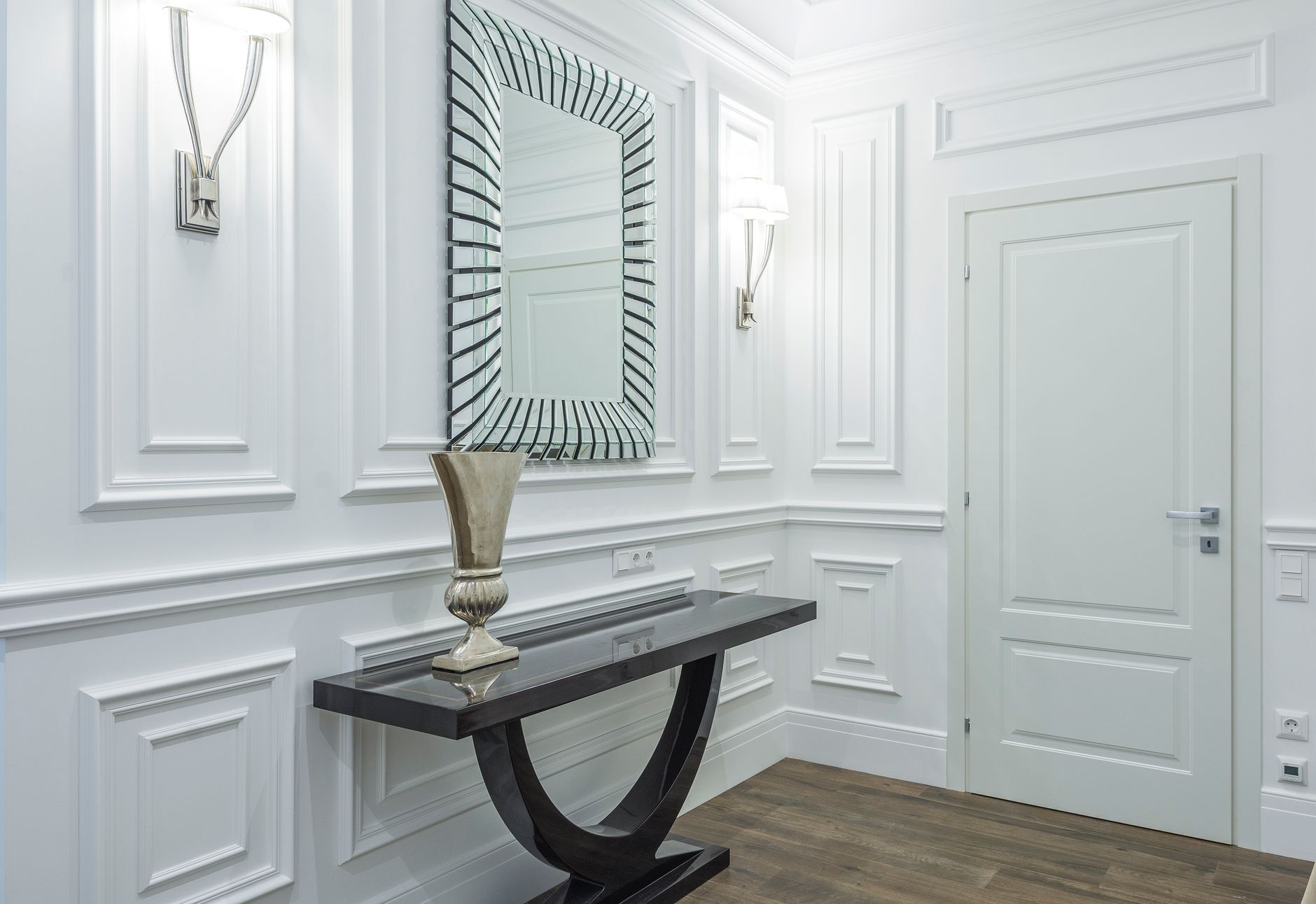
Entries are usually the worst lit and most cramped part of a home, and a mirror is the cheapest fix for both. Place it well and you get real benefits:
- On the side wall, above a console. The standard setup, and the one both schools sign off on. It widens the entry visually and gives you somewhere to drop keys.
- Opposite or angled toward a window, so it pulls daylight deeper into a dark hall. Light is the cheapest cure in feng shui for a dead corner, and it is also the one place where the tradition and circadian science say the same thing.
- Reflecting greenery, art, or something you like. The core mirror principle in feng shui is that a mirror doubles whatever it faces. If you accept that framing at all, point it at something worth doubling.
And the things to keep out of it:
- Clutter. A mirror facing the shoe pile doubles the shoe pile. In plain terms, you now see the mess twice, from two angles, every single time you come home.
- A toilet or an open bathroom door. Same doubling logic, worse subject.
- Another mirror. Two facing mirrors are described as endless qi ping pong. They are also genuinely disorienting to walk between.
- The door itself, if the entry is tight. A mirror about a meter from your face as the door swings open is not calming for anyone, whatever they believe.
If you are renting, all of this is hooks and leaning, no drilling required. A large mirror leaned against the side wall behind a console is the standard rental version and it looks better than a hung one anyway.
What if the entry is a wall in your face?
Common in apartments: you open the door and there is a blank wall about a meter and a half away. Classical feng shui reads that as incoming qi getting compressed with nowhere to go. The obvious instinct is to hang a mirror there to fake some depth, and this is exactly the contested spot. Purists say never opposite the door, no exceptions. Others say a mirror is the only thing that opens up a dead alcove.
Safer options that nobody argues about: a landscape painting or a photograph with real depth in it, a wall light or an uplight to lift the space, or a shallow console with something living on it. If you do go with a mirror there, hang it off center and high enough that it shows the ceiling and the wall rather than your face at the threshold.
The mirror at the end of a long hallway
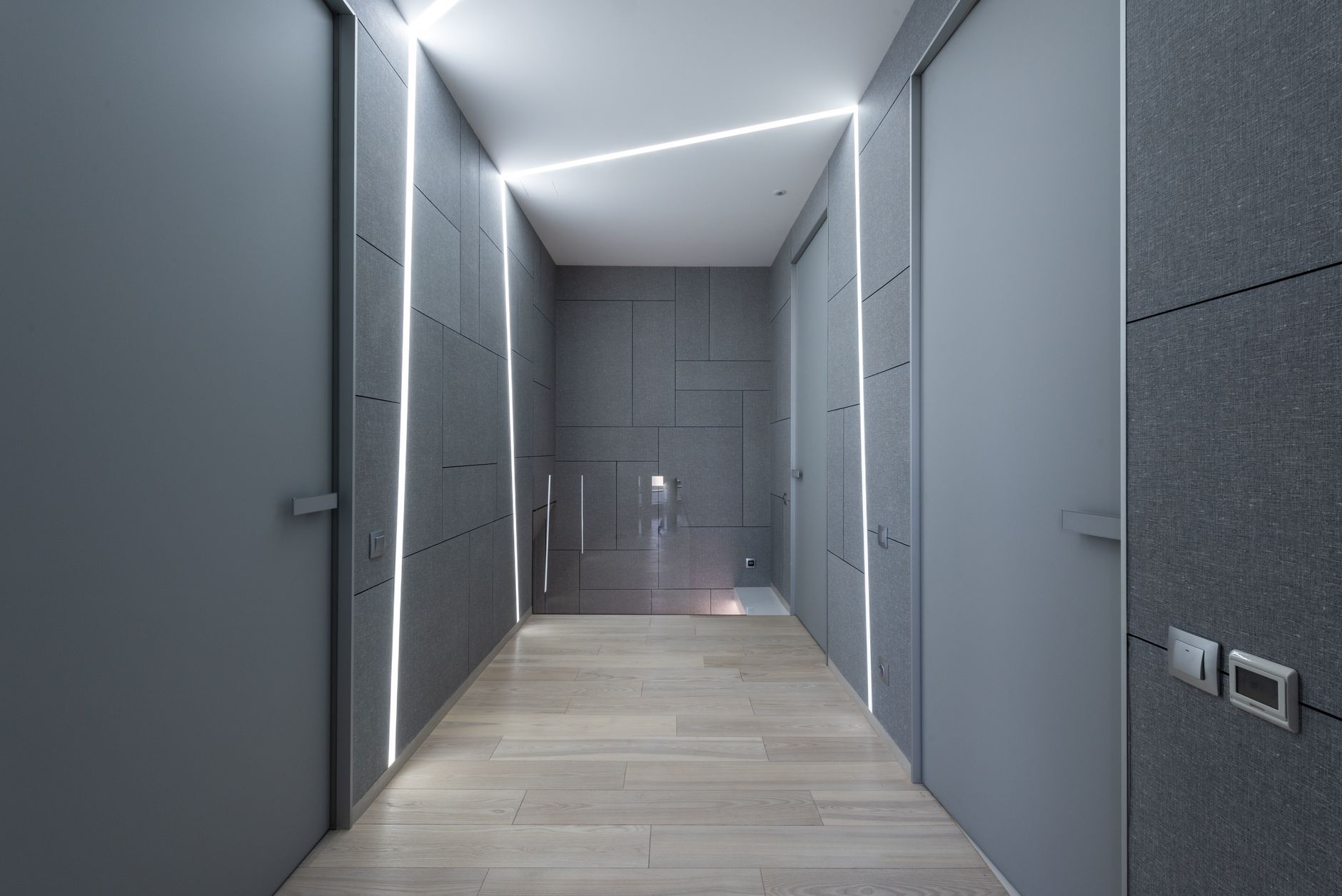
Different problem, same object. A long straight corridor is treated as a sha qi channel: qi accelerates down a straight run like water in a chute, blasting whatever sits at the end and bypassing the rooms along the way. Sticking a mirror at the far end is a popular idea because it makes the hall look longer and brighter. It also, in this logic, sends the accelerated energy straight back down the corridor at you. Worse if the corridor starts at the front door, because then the mirror is a front door mirror wearing a hat.
The cures the tradition actually gives for a long corridor are better anyway, and they are all rental friendly:
- A runner rug down the length, to visually slow the path.
- Art staggered on alternating walls, so the eye (and the qi, if you want the full version) zigzags instead of sprinting.
- Light fixtures at intervals rather than one at the end.
- A plant or a narrow console breaking the run partway down.
- A faceted crystal ball hung on a red string, the classic cure, which is said to refract a straight beam of rushing energy into scattered light. Purely symbolic, but it is small, cheap and it does throw rainbows on the wall.
If you want a mirror in a corridor, hang it on a long wall, not the end wall. It still widens the space and it stops being the thing at the end of the chute.
The bagua mirror: outside only
Worth separating out, because people buy one after reading about the front door rule and then hang it in the hallway.
A bagua mirror is the octagonal one with the eight trigrams around the frame. The trigram arrangement, not the glass, is what does the protective work. Two types: convex ones scatter incoming sha qi outward like a riot shield, concave ones quietly absorb it instead. Both are exterior devices. They go above the front door, on the outside, aimed at a specific problem: a lamppost pointed at your house, a sharp roof corner, a road running straight at your front door. Indoors is the near universal rule against them. Treat one as outdoor armor, not decor.
Two more honest notes. First, the bagua mirror is folk practice, not classical method, and many modern masters discourage it altogether. Second, do not aim one at a neighbor’s door. You are, in the logic of the thing, firing energy at them, and that has escalated into real mirror wars between neighbors in Hong Kong and in New York’s Chinatown.
The honest verdict for a skeptic
There is no measurable mechanism here. Nothing bounces off your hallway mirror and leaves through the door. Nobody has shown that a mirror placement changes anybody’s income, and the fact that two established schools read the same mirror in opposite ways tells you what kind of claim this is. What is real is much more boring, and much more useful:
- A mirror facing the door throws whatever is outside back at you on arrival. Car headlights at night, the street, a neighbor’s bins, your own face in bad light. Every single time you walk in.
- The first thing you see when you enter sets your state for the next few minutes. The tradition calls this the bright hall (明堂, ming tang) and treats the first meter or two inside as the tone setter for the whole home. Interior designers call it the arrival threshold. Either way, if the first thing you see is a doubled pile of shoes, that is what you get.
- Mirrors in tight entries genuinely help. Narrow halls feel wider, dark halls feel brighter, and you can check your collar on the way out. That is why people want one there in the first place.
So the practical rule survives the skepticism intact, just for different reasons. Side wall, not facing the door. Point it at light or something you like. Keep the mess out of it.
What is classical, what is pop, what is just good sense
- Classical: the front door as the mouth of qi, no mirror directly opposite it, the mirror as a thing that doubles what it faces, the long corridor as a sha qi channel.
- Western or pop: the entry mirror as an active invitation, which is BTB and worth naming as a modern school rather than a mistake. Bagua mirrors are folk practice, not classical method, and never indoors in either camp.
- Just good design: mirrors expanding small dark spaces, bouncing daylight, and being useful at the point where you leave the house.
- The overlap worth keeping: what greets you at the door matters, light beats darkness, and doubling a mess is a bad idea in any language.
If you only do three things
- Move the mirror off the wall directly opposite your front door and onto a side wall, ideally above a console.
- Check what it reflects. Light, plants, art: keep. Shoes, bins, an open bathroom door: fix that first, or move the mirror again.
- If your entry opens straight into the main room, deal with the sightline before you worry about the mirror. A tall plant or a console offset to one side does more for how the place feels than any mirror decision, and there is a whole method to breaking that entryway sightline.
Further reading
- Feng shui · Chinese traditional practice
- Mirror · Object that reflects an image
- Bagua · Eight trigrams used in Taoist cosmology
- Qi · Vital force in traditional Chinese philosophy
- Door · Movable barrier that allows ingress and egress
- Vestibule (architecture) · Small room leading into a larger space
- Line of sight · Unobstructed line between an observer and a subject of interest
Definitions and background from Wikipedia.
Quick questions
- Is a mirror facing the front door actually bad?
- It depends entirely on which school you ask, and that is the honest answer most sites won't give you. Classical compass practitioners are firmly against it: the door is the mouth of qi and a mirror opposite it rejects what comes in. Many western BTB practitioners disagree and use entry mirrors deliberately. There is no measurable mechanism either way. What is real is the everyday experience: if the mirror shows you car headlights, the street, or your own startled face every time you open the door, move it.
- Where should an entry mirror go instead?
- On a side wall, perpendicular to the door, ideally above a console table. There it does the job people actually want a mirror for: it makes a narrow entry feel wider, bounces daylight deeper into the hall, and gives you a place to check yourself on the way out. Both schools are happy with this placement, which is why it is the standard advice.
- Can I hang a bagua mirror inside my hallway?
- No. The bagua mirror, the octagonal one with the trigram frame, is exterior armor, not decor. It goes above the front door on the outside, aimed at a specific problem like a lamppost or a roof corner pointing at your house. Indoors is the near universal rule against it, and even outdoors you should not aim it at a neighbor's door. That has caused real mirror wars between neighbors in Hong Kong and in New York's Chinatown.