Where to put your bed, according to feng shui (and common sense)
The short answer: Put your bed against a solid wall where you can see the door, but not directly in line with it. That's the commanding position, and it's about 80% of bedroom feng shui.
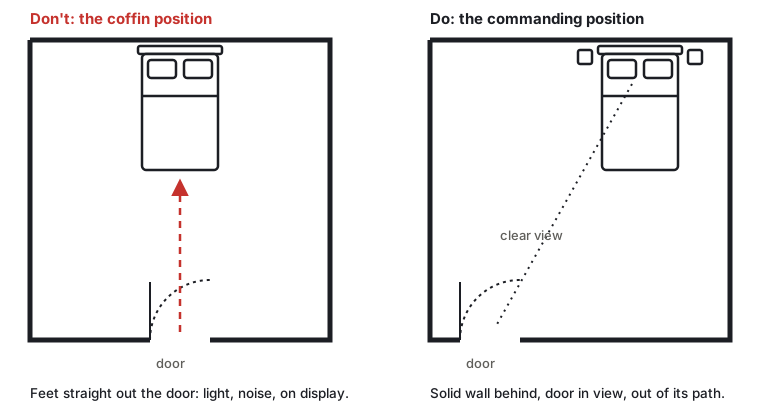
There’s a real feng shui name for the best spot in the bedroom: the commanding position. It’s not mystical. It means you can see the door from your bed without being right in front of it: you “command” the room.
Interior designers put beds in the same place without ever using the term. Here’s the rule, the reason, and what to do when your room fights you.
Which wall should the bed go on?
The wall furthest from the door, diagonal to it. From your pillow you can see who comes in, but you’re not in the door’s direct path.
Two more things the classic rule asks for:
- A solid wall behind your head. Feng shui calls it your mountain: support at your back. Practically: no window drafts, no headboard knocking against glass.
- Space on both sides. Walk around the bed, one nightstand each side. A bed shoved in a corner reads as temporary, even to you.
Why it works isn’t a mystery. Facing the entrance is the same instinct that makes you pick the restaurant seat facing the room. Your brain keeps a low-level watch on the entry point; when you can see it, that watch stands down and you relax.
Can my bed be in line with the door?
Feng shui says no. Feet pointing straight out the door is the one layout every school agrees to avoid. The traditional reading is grim (it’s called the coffin position), but you don’t need the folklore to see the problem: a bed in the door line gets hallway light, noise, and the feeling of being on display. None of that helps you sleep.
If the room leaves you no choice, break the line instead of moving house: a bench or low footboard at the end of the bed, or a rug that visually stops the corridor running into your mattress.
What if the room has no good wall?
Small rooms and rentals rarely offer the textbook diagonal. Work down this list and stop as soon as one works:
- Solid wall behind the head, door visible: the full rule.
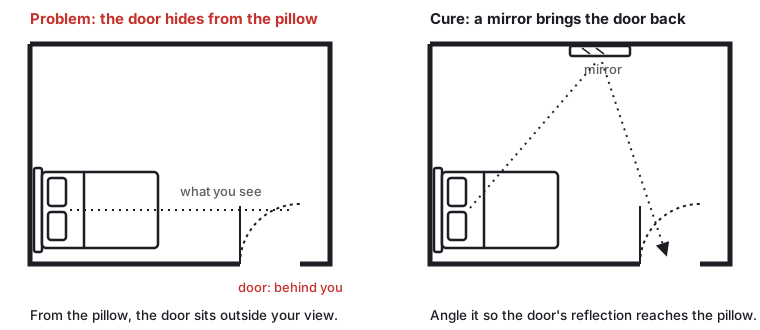
- Solid wall, door not visible: hang a mirror positioned so you can see the door’s reflection from the pillow. This is the classic cure.
- Window behind the head, nothing else possible: a tall solid headboard and heavy curtains do the wall’s job.
Renting and the wall situation is what it is? A solid headboard covers most of it. The rule is about feeling backed and unsurprised, not about the wall itself.
Does any of this actually matter?
Honestly: the see-the-door part, yes. Feeling watched-over-your-shoulder in a room is a real, well-described discomfort, and the fix is exactly what feng shui prescribes. The rest (mountain walls, paired nightstands) sits somewhere between good design sense and tradition. It costs nothing to follow, and rooms arranged this way photograph better and feel calmer.
What we’d skip: buying anything sold as a “cure” beyond the mirror trick. The layout is the medicine; the trinkets are merchandise.
Quick questions
- Can my bed face a window?
- Yes. A window behind the headboard is the thing feng shui avoids, and even that is fixable with a solid headboard and decent curtains. A window you face from bed is not a problem.
- Is it bad to sleep with your feet pointing at the door?
- Feng shui calls it the coffin position and avoids it. In practice the issue is comfort: right in line with the door you get light, noise and zero privacy. Shift the bed off the door line if you can, for the practical reasons.
- What if my only option breaks all the rules?
- Get a solid headboard, keep the door visible from the pillow if possible, and stop there. A rule you can't follow in your actual room is not a rule worth losing sleep over.