Why your entryway lets guests see your whole living room (and how to fix it)
The short answer: Break the straight sightline from the front door with one tall object (a plant, console or bookcase) placed just inside the entry, offset to one side so it doesn't block the path. Guests' eyes land there first instead of on your sofa. Feng shui calls the result a bright hall; you'll just notice the room feels calmer.
The moment someone walks into your home, the first thing they see sets the tone. Right now, your entryway probably opens straight into your living room, which means the first thing visitors see is you on the sofa, possibly with your feet up or laundry piled nearby. That’s awkward for them and worse for you. A simple buffer between the front door and the main living space solves it in one very achievable move.
In classical feng shui, the front door is the mouth of qi (气口), the point where energy enters your home. That energy needs space to land and settle before it moves deeper. The area just inside the entry is the bright hall (明堂, ming tang). It should feel open and intentional, not like a tunnel into your private relaxation zone. When guests walk straight from the threshold into a full view of your living room, you lose the threshold effect: the psychological pause that lets a visitor switch from public to private mode.
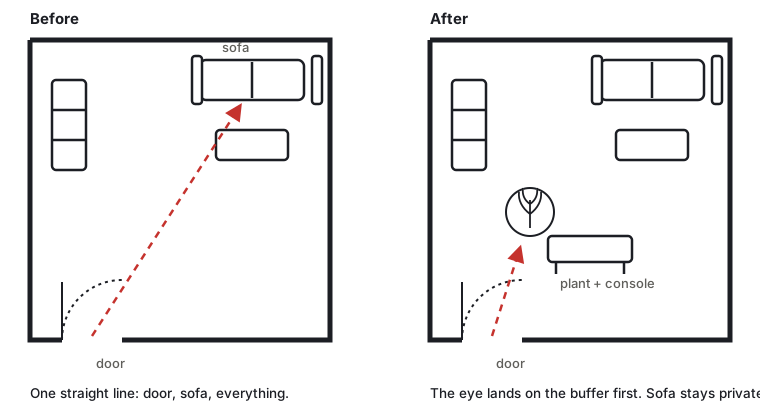
What breaks the sightline, and where to put it
Slow the visual line down with something positioned between the door and the seating area. A tall plant, a bookcase, a console table, or a piece of art on the wall all work, but placement matters. It goes to one side of the entry opening, not dead centre blocking traffic. When a guest’s eye lands on that object first instead of sweeping straight to the sofa, the energy gathers at the threshold instead of piercing through. That’s the bright hall doing its job.
A tall leafy plant (pothos on a stand, monstera, fiddle leaf fig) works particularly well because it’s affordable and genuinely good to have around. Height is the thing: it needs to catch the eye at roughly chest level or above. If a bookcase is already in the room, shifting it to frame one edge of the entryway gives you the same effect without buying anything.
Renting, or can’t rearrange much? A console table just inside the threshold, left or right of the entry and not blocking it, does the same visual work. Put a plant on top and you’ve built an arrival moment with zero construction.
Why this works in open-plan layouts
If your living room flows into a kitchen or dining area with no door anywhere, the principle holds; only the placement shifts. You’re still framing the entry so the first view isn’t the full expanse. A tall plant or console just inside the edge of the living area does the job. You’re not blocking the room. You’re preventing the one straight line that runs from the door through every private zone at once. Even a modest anchor works, because it gives the eye a place to land before it wanders into the rest of the home.
The anticipation factor
There’s something almost theatrical about layers of discovery in a home. A visitor sees the plant and the bookcase first. Small pause. They haven’t seen the whole living room yet. When they step fully inside, the space reads as composed rather than exposed. Design psychology has a name for this: prospect and refuge. The visitor gets a read on the room’s layout without anyone feeling on display.
Feng shui describes the same thing from the other direction. Energy that rushes in a straight line from the entry to the back of the home is called a piercing hall (穿堂煞, chuan tang sha): harsh and unsettling. Slowing that first flow with a physical object changes how the entry feels the moment the door opens. Whether you read that as qi or as the psychology of a well-composed threshold, the practical result is identical: calmer, more intentional, more welcoming.
Common mistakes to avoid
The biggest one: putting the buffer dead centre in the doorway. You’re redirecting the eye, not blocking the opening. A plant in the traffic path creates friction and looks like you’re hiding something. Offset it.
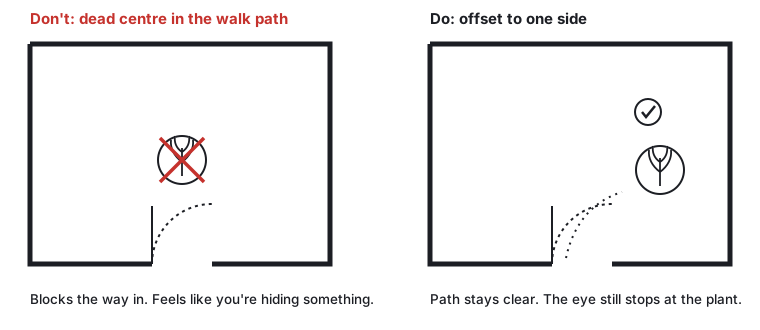
Second: going too small. A succulent on a side table won’t interrupt anything. You need height and visual weight: a plant around 1.5 m, a tall bookcase, or a painting at eye level.
Third: clutter around the base. Shoes, bags and mail piled around your console turn a threshold gesture into visual noise. The buffer only reads as intentional if it’s clean.
You probably don’t need to buy anything
Move the bookcase to the room’s edge nearest the entry. Relocate the tall plant from the bedroom. Hang the framed piece you already own just inside the threshold at eye level. Even shifting furniture 15 cm can change the visual pathway. The goal is simple: give the entryway its own presence, so guests get a transition instead of a full-frontal view of your living room, all for the price of a little rearranging.
Quick questions
- What should I put in an entryway that opens straight into the living room?
- One tall thing with visual weight: a plant around 1.5 m or higher, a console table, a bookcase, or art at eye level. Place it just inside the entry, offset to the side, never in the middle of the walking path.
- Is a front door facing the living room bad feng shui?
- The door itself isn't the problem. The uninterrupted straight line from door to sofa is. Classical feng shui avoids sightlines that pierce straight through a home. Break the line with one object and the layout is fine.
- Does this work in a rental or an open-plan space?
- Yes, that's the point of the fix. A console or plant just inside the threshold needs no construction, no wall, no permission. In open plans, place it at the edge of the living area so the first view isn't the full expanse.